About Void Diary
A clearer picture of your day
Void Diary is a private digital bladder diary. It helps you keep drinks, urinary urgency, voids, leakage, and related observations together so you can notice patterns or share a useful record with a health professional.
The name explained
What is a void diary?
A void is the medical term for passing urine—peeing. A void diary, also called a bladder diary, records what and how much you drink, when you pass urine, how much you pass when measured, when urgency happens, and any leakage.
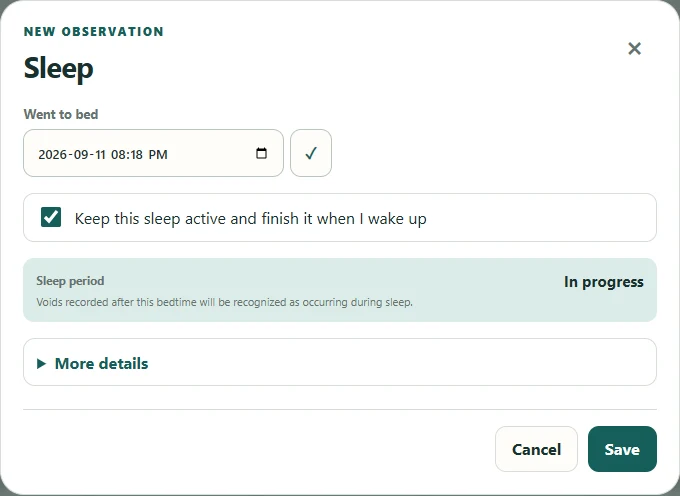
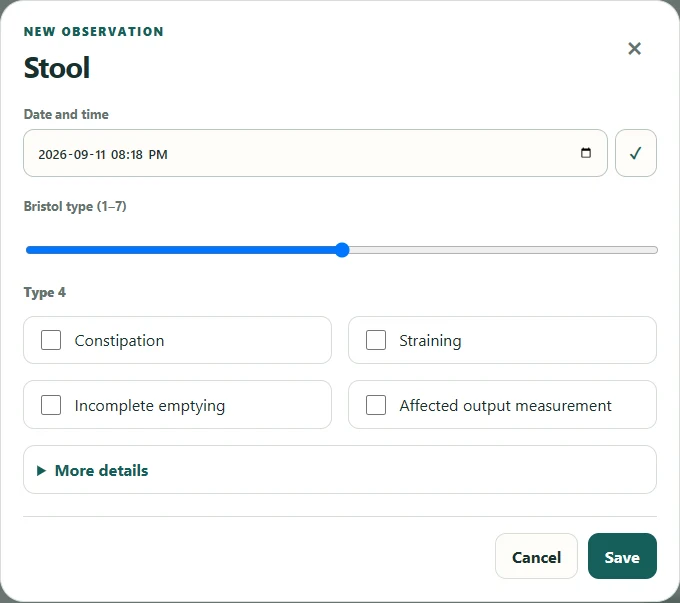
This app makes that record easier to keep with quick, editable entries, one timeline, descriptive charts and summaries, and reports or exports you can choose to share. It also supports optional absorbed-output, sleep, stool, and context observations when they are useful to you.
Why this exists
Created from lived experience
Void Diary was created by someone trying to understand their own body better and make sense of the issues they were experiencing. It is shared in case other people find it useful for recording, understanding, or communicating their own experiences.
That personal experience shaped the tool, but the app remains an observation aid—not medical advice or a replacement for professional care.
Getting started
Record only what is useful to you
Choose where it lives
Sign in with Microsoft to synchronize a private account diary, or explicitly work only in this browser. Hybrid account storage remains available when a connection drops.
Add observations
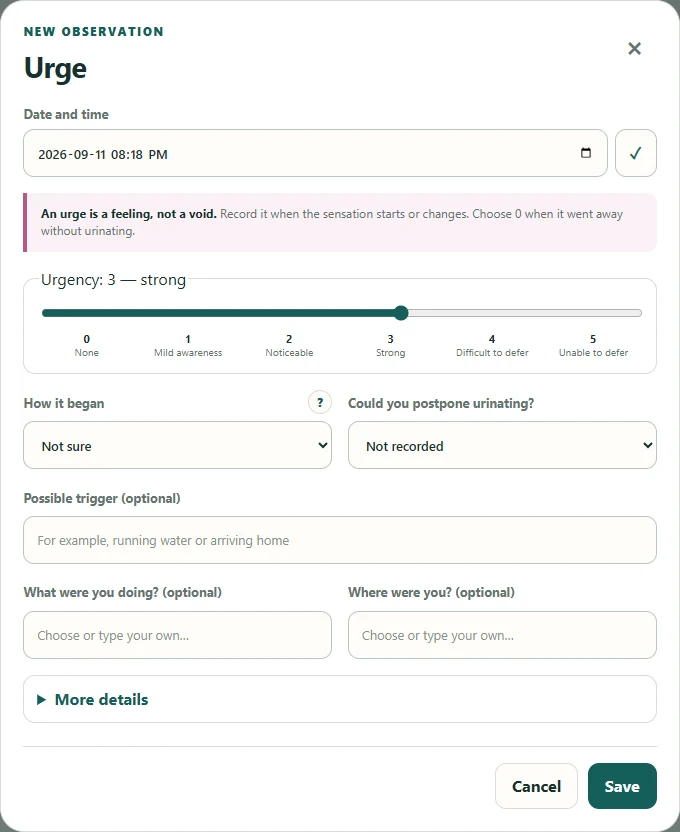
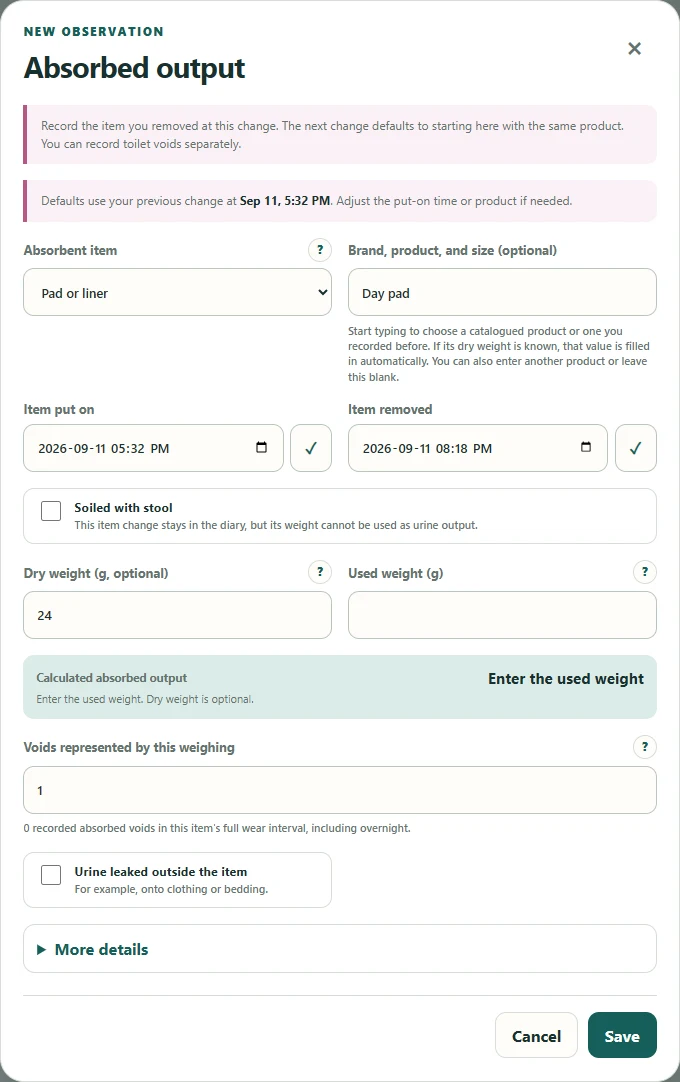
Choose the closest entry type. Optional details can be left blank, and every entry can be corrected later.
Review patterns
Stats describe the entries you recorded. Missing entries and unmeasured fluids can change the apparent pattern.
Offline is not signed out. If a signed-in hybrid diary loses its connection, the app keeps the account name and local copy and asks you to reconnect. Choosing Sign out removes that account copy and cached name from this browser. There is no required tracking plan; for a structured diary requested by a clinician, ask which observations and how many days they want recorded.
Take a look inside
One diary. More ways to see it.
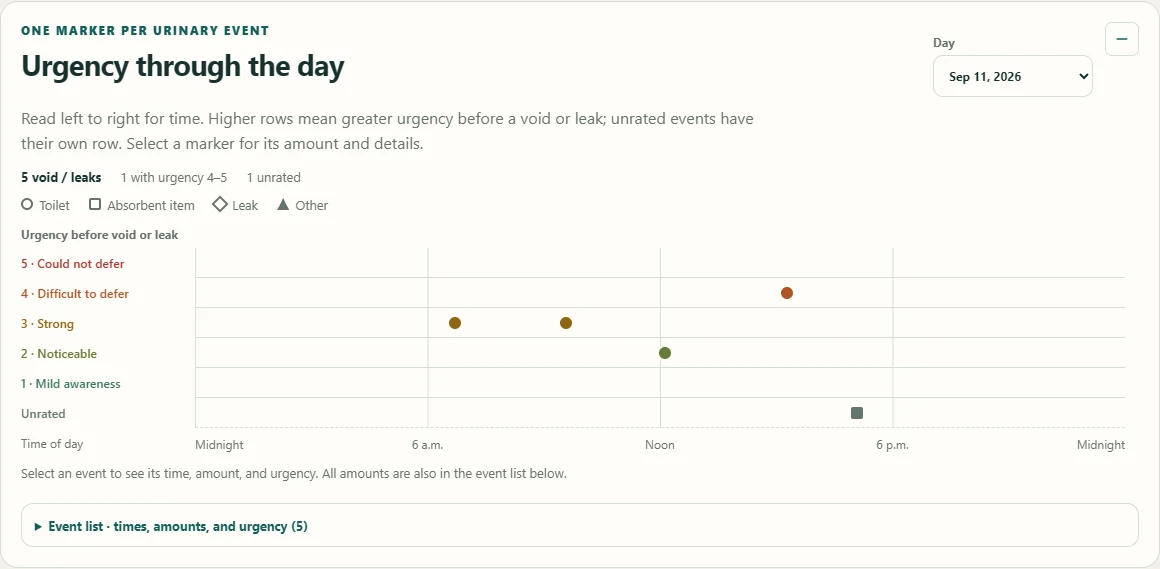
Daily diary
A dashboard, one timeline, and quick forms for each kind of observation.
Example only · sample data
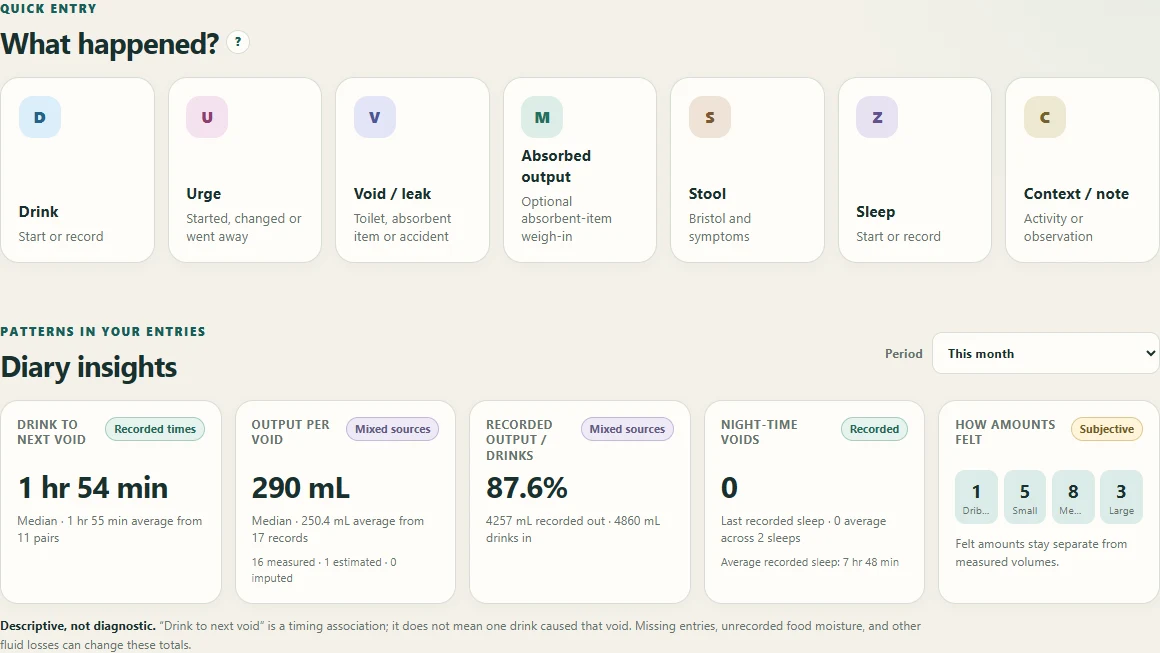
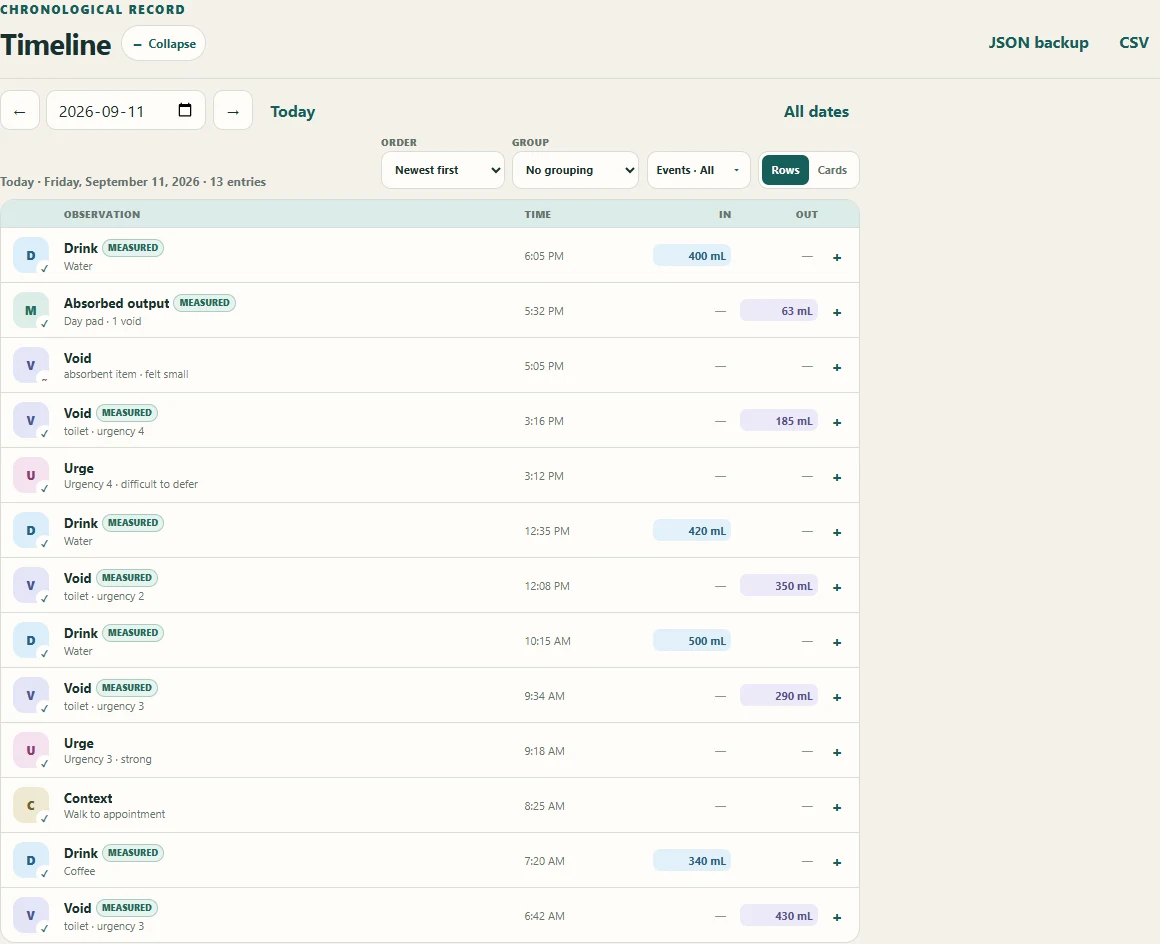
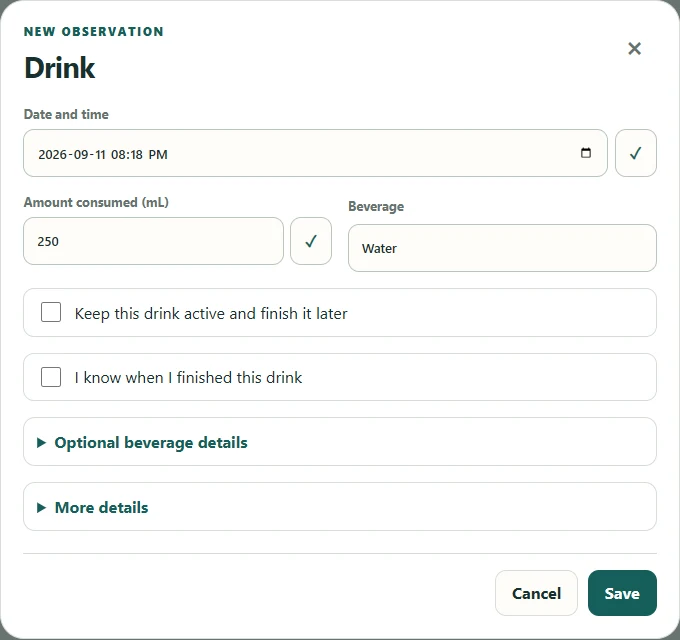
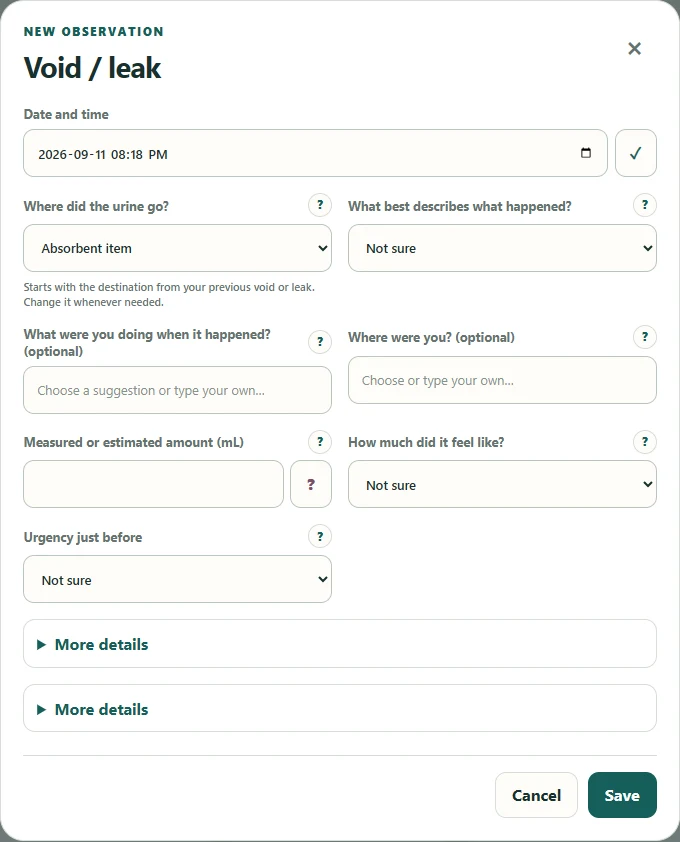
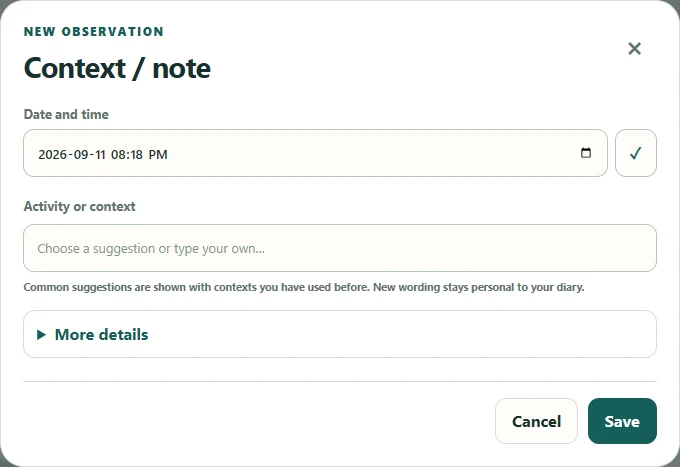
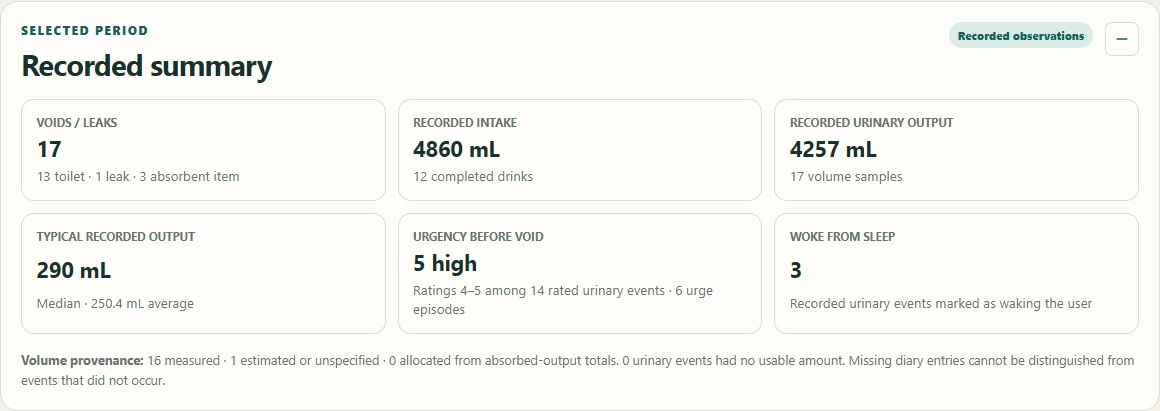
Patterns & stats
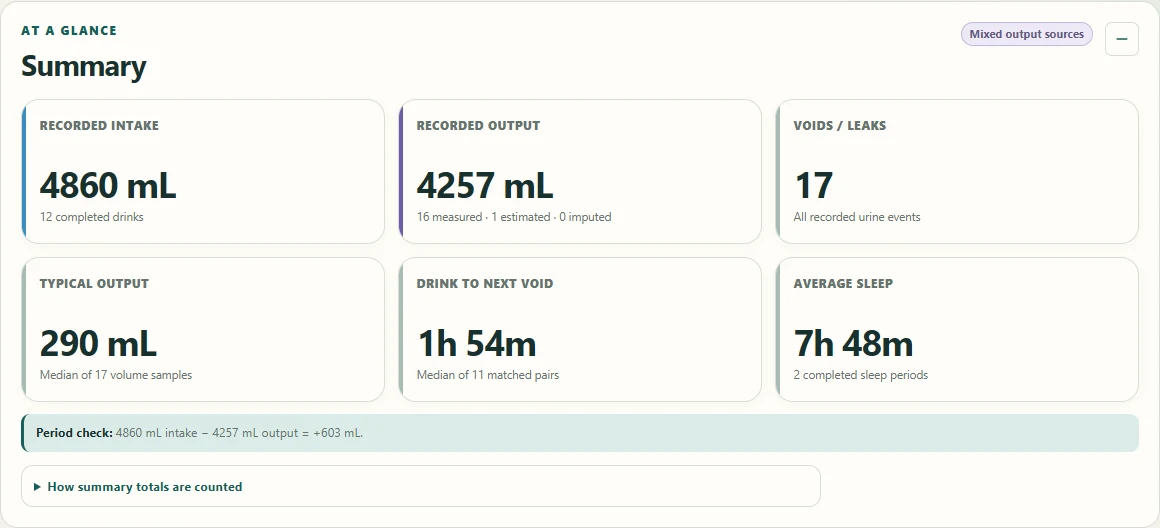
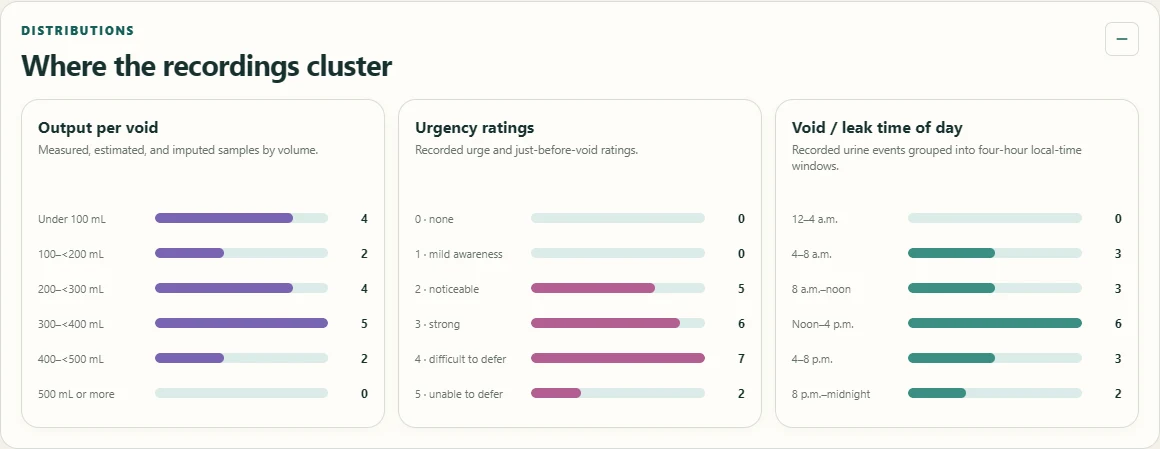
Charts and summaries help you explore the observations you record.
Example only · sample data
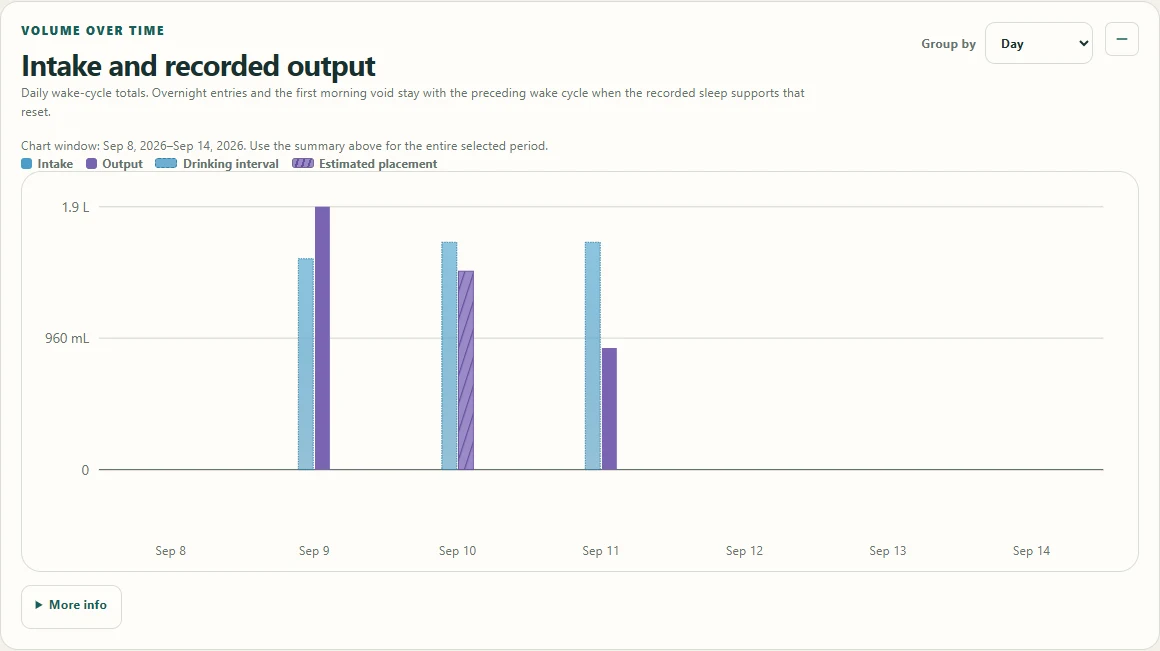
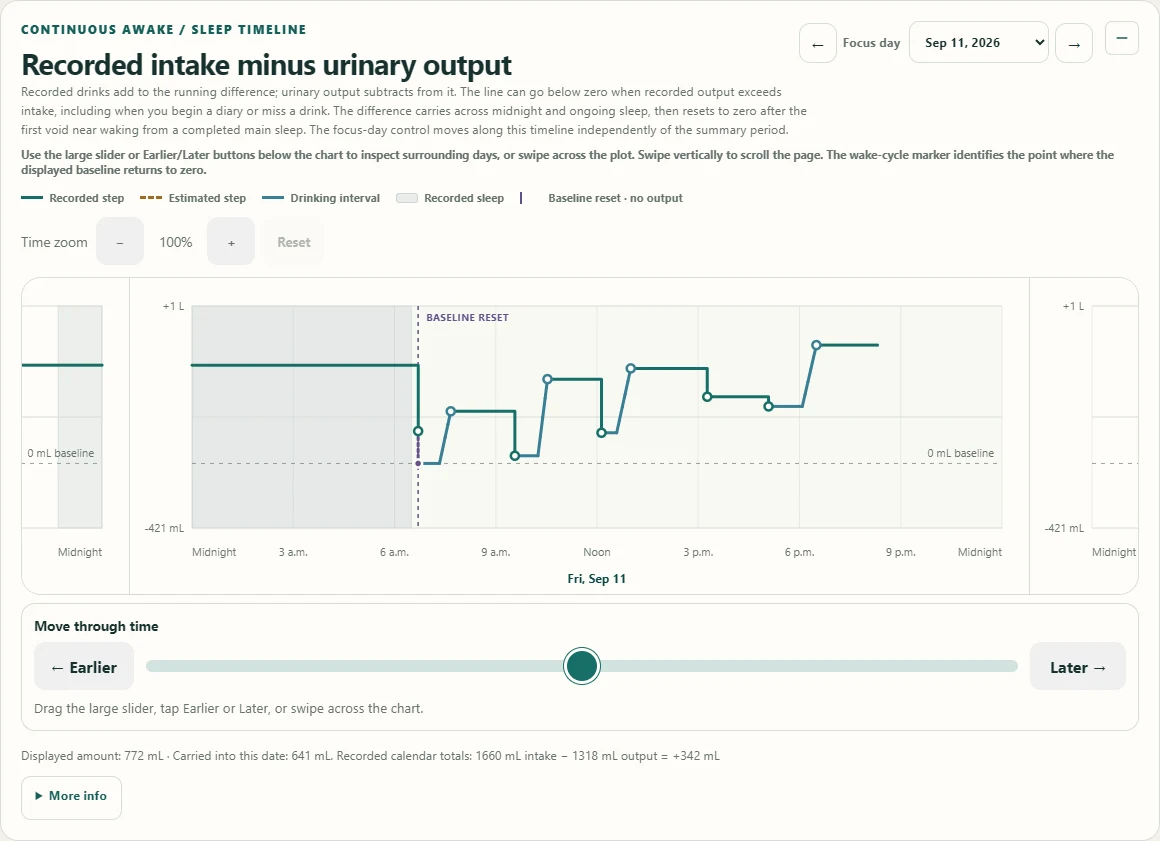
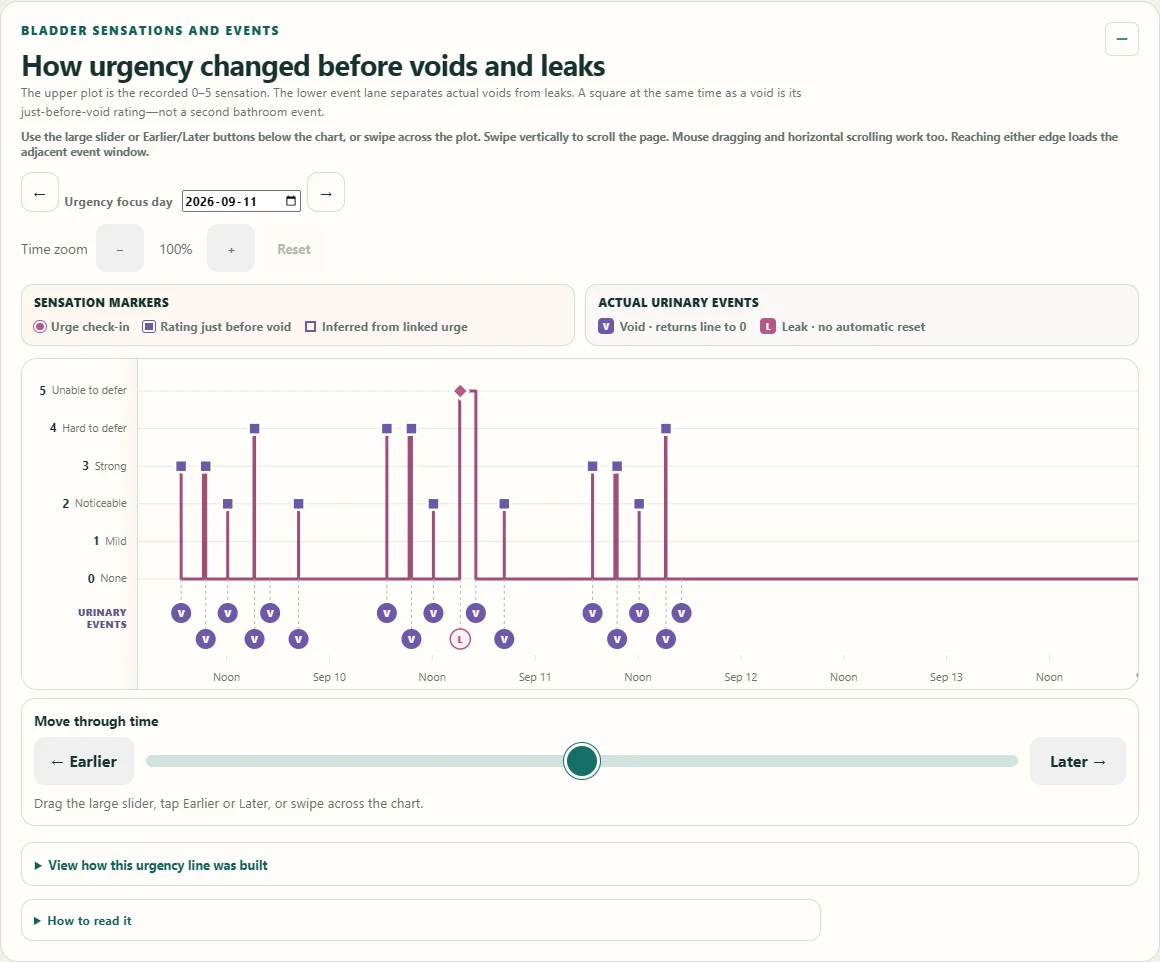
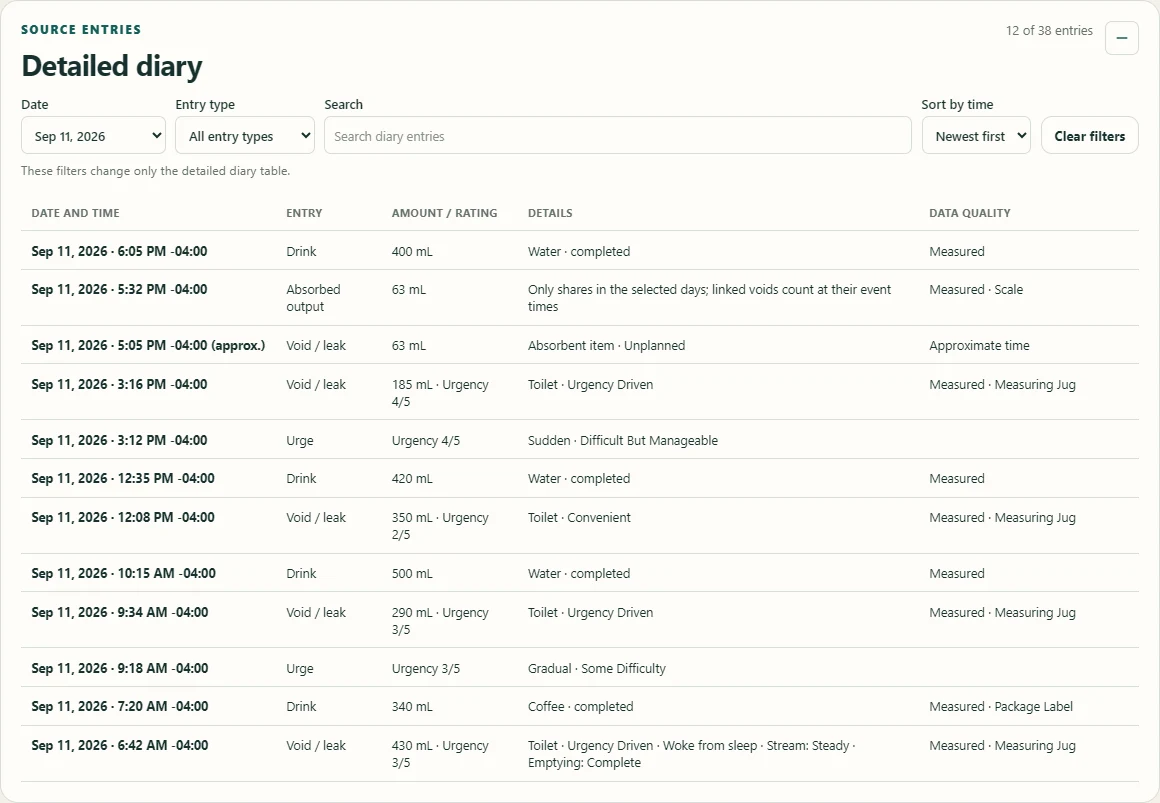
Clinician view
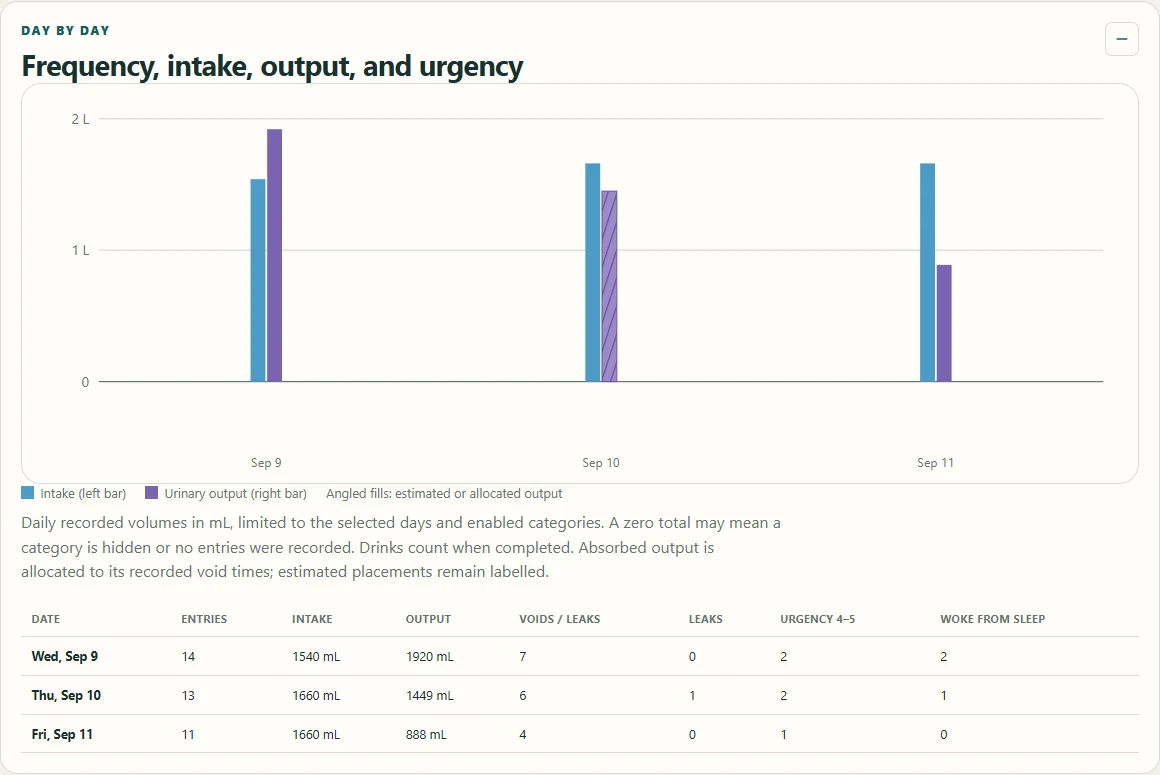
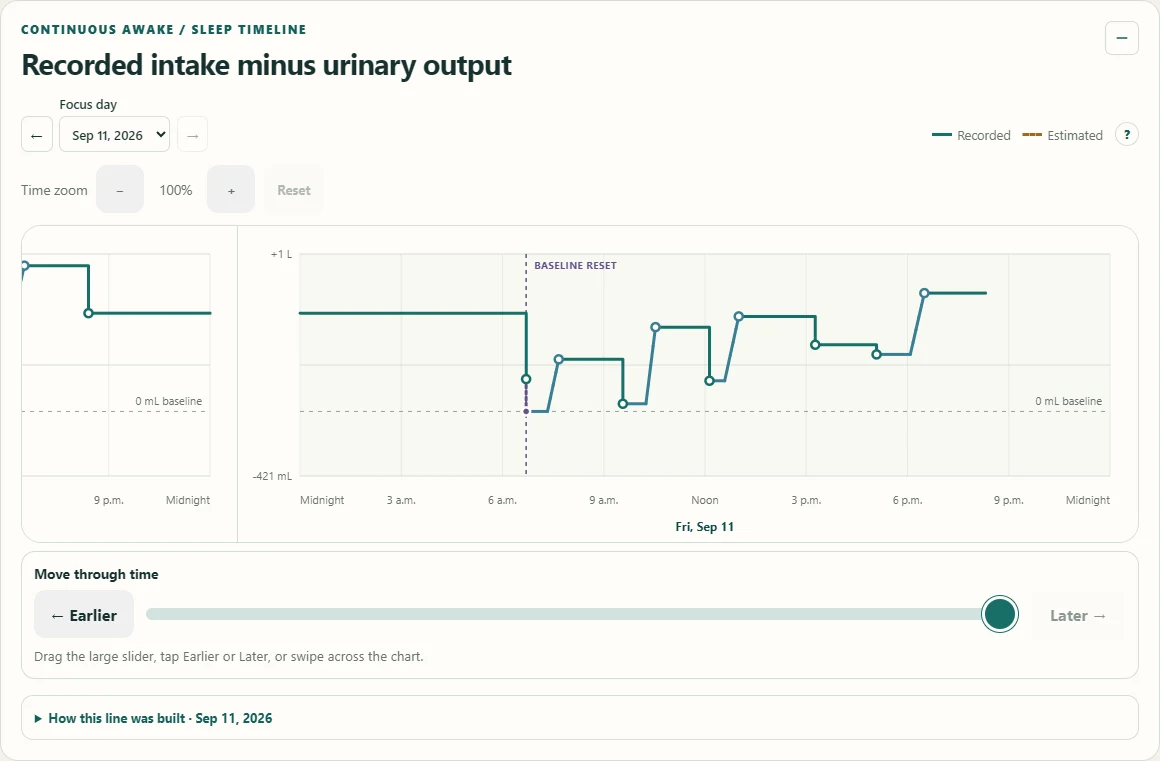
Graphs, daily totals, and a detailed table to review with your doctor.
Example only · sample data
Diary language
What the entry types mean
- Urge
- The feeling that you need to urinate, whether or not you urinate afterward.
- Void / leak
- A void means passing urine—peeing—into a toilet, an absorbent item, or somewhere else. A leak is urine that comes out unintentionally.
- Absorbed output
- An optional weigh-in for a pad, liner, or absorbent underwear. If both weights are entered, the dry weight is subtracted. If only the used weight is entered, it is treated as an estimated volume.
- Recorded intake
- The drinks entered in the diary. It does not include moisture in food or anything that was not recorded.
- Recorded output
- Measured or estimated urine volumes entered individually or calculated from absorbent-item weights.
Charts and estimates
What the lines can—and cannot—show
Recorded difference
The within-day line adds recorded drinks and subtracts recorded urinary output. It is not a measure of hydration or fluid retained by the body.
Uncertainty range
A shaded range appears when the diary includes estimated amounts. It uses a stated visual assumption to show uncertainty; it is not a clinical confidence interval.
Missing information
The app does not invent a volume for subjective entries such as “small” or “large.” Unrecorded drinks, food moisture, sweat, and other fluid losses are also excluded.
Absorbed-output timing
An absorbent-item weigh-in may cover several voids. The chart assigns its total to matching recorded absorbent-item void times, weighting light and heavy impressions when available. Any unmatched remainder stays at the item-change time instead of being assigned an invented time; patterned marks show that the exact allocation remains uncertain.
Privacy and security
Your diary and your Microsoft identity
Same account, same cloud diary
Your Microsoft sign-in supplies an app-specific secure identifier. Using the same Microsoft identity with Void Diary returns the same online diary.
Name stays out of diary records
Your display name is used in the browser for convenience. Void Diary does not put your name or email into its online account or diary records or sell your diary data. You can choose to provide a read-only clinician report through a sharing link.
Sharing requires a signed-in, synced account. You choose the report days, display settings, personal-note inclusion, and optional expiry. Anyone with the link can read that selected report until it expires or you revoke it. The recipient's report is kept in memory for the page, without saving it into their diary. You can manage links in the clinician view; deleting your account data revokes them. Information already viewed or copied cannot be recalled.
Hybrid storage
Entries are saved in this browser first. When you have a verified sign-in, they synchronize in the background and remain available if the connection drops.
Cloud-only storage
A verified sign-in and connection are required. Diary information is held only in memory while the app is open and is fetched again next time.
While signed out
While signed out, diary entries stay in browser-local storage and are not sent to Azure. They are not automatically attached to an account that signs in later. Local information can be lost when site data is cleared and can be seen by other people who use the same browser profile.
Improving the app
We use basic analytics to understand which features people use and error reports to improve reliability. These do not include your name, email, or diary contents.
Your data controls
Data settings let you download a complete JSON backup, restore that format locally, export CSV, explicitly move local-only entries into your account, or permanently delete your account data—including private feedback. Active sign-out removes that account's diary copy and cached name from this browser; losing a connection does not.
Your agreement
Terms of Use
Current terms version: 2026-08-26
Purpose. Void Diary is a personal tool for recording and sharing observations. It is not a medical device or a substitute for professional medical care.
Your responsibility. You are responsible for the information you enter, how you use or share it, and for seeking advice from a qualified medical professional.
Availability. The app may be unavailable or contain errors. Do not rely on it as your only record or as a way to monitor an urgent health concern.
Changes. If these terms or warnings materially change, you may be asked to review and accept a new version before cloud synchronization continues.